Cameras
Body, gate, lens series, focal length and reducers, with the field of view drawn on the plan.
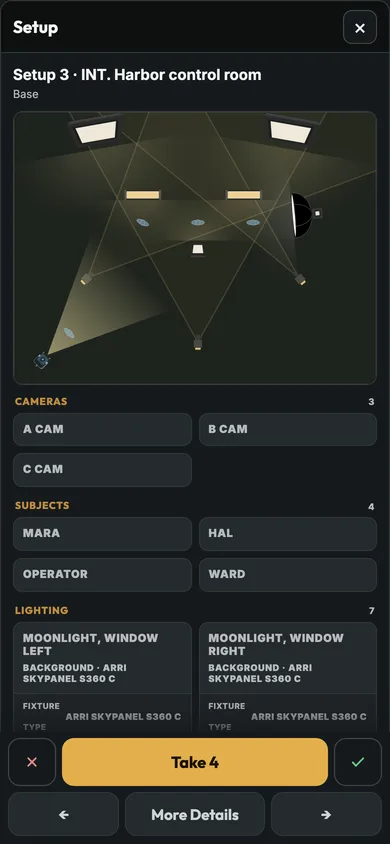
Put a camera down and you see what it really sees for that body, gate and focal length. Lights come from the fixture catalog with their real beam. The plan you give the gaffer is one that works on set. On the day, grip and electric open it from any shot on the live board.
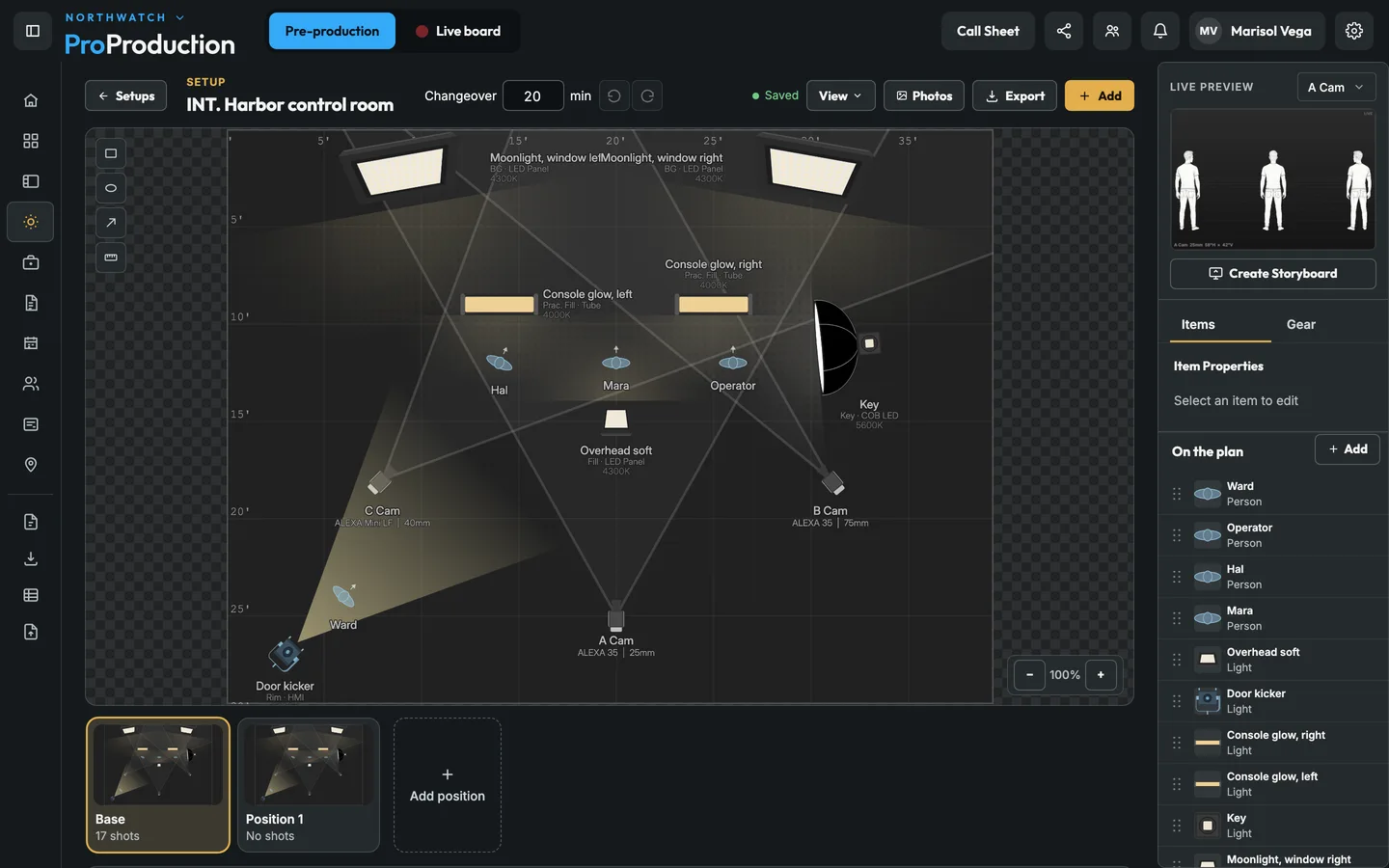
Type the room size, pick a room from a building you’ve already drawn or trace a location off the map.
The camera shows its real field of view for the lens, and each light shows the beam it actually throws.
Shots attach to the setup, the gaffer gets the inventory list and the storyboard frame comes right from the plan.
Body, gate, lens series, focal length and reducers, with the field of view drawn on the plan.
Search the fixture catalog, set the color and what the light is for, and add stands and modifiers.
Place the actors and how they move through the scene.
Walls, flags, set dressing and blocking, with names, colors and notes.
A starting and ending position for when the blocking changes mid-shot. Shots attach to whichever one they use.
Every fixture, stand and modifier in a setup as a list to pull from the truck.
Rooms and walls to scale. It can read them from a floor plan PDF if you add your own AI key, and every setup in the building reuses them.
Furniture and set builds at their real dimensions, drawn from the top and from each angle.
Generate a storyboard frame from what the setup’s camera sees and save it to the shot.
Built-in catalogs. Camera bodies, gates and resolutions from 11 makers, lens series from 39 makes, and a fixture database with beam angles and color temperature.
Yes. Set pieces and buildings live here with real dimensions and angle drawings, and the art department has its own role.
It's free for one project, from the script to the live board, and you don't need a card.